3. The Combination of a Robotic Scanner and a Spinal Navigation System
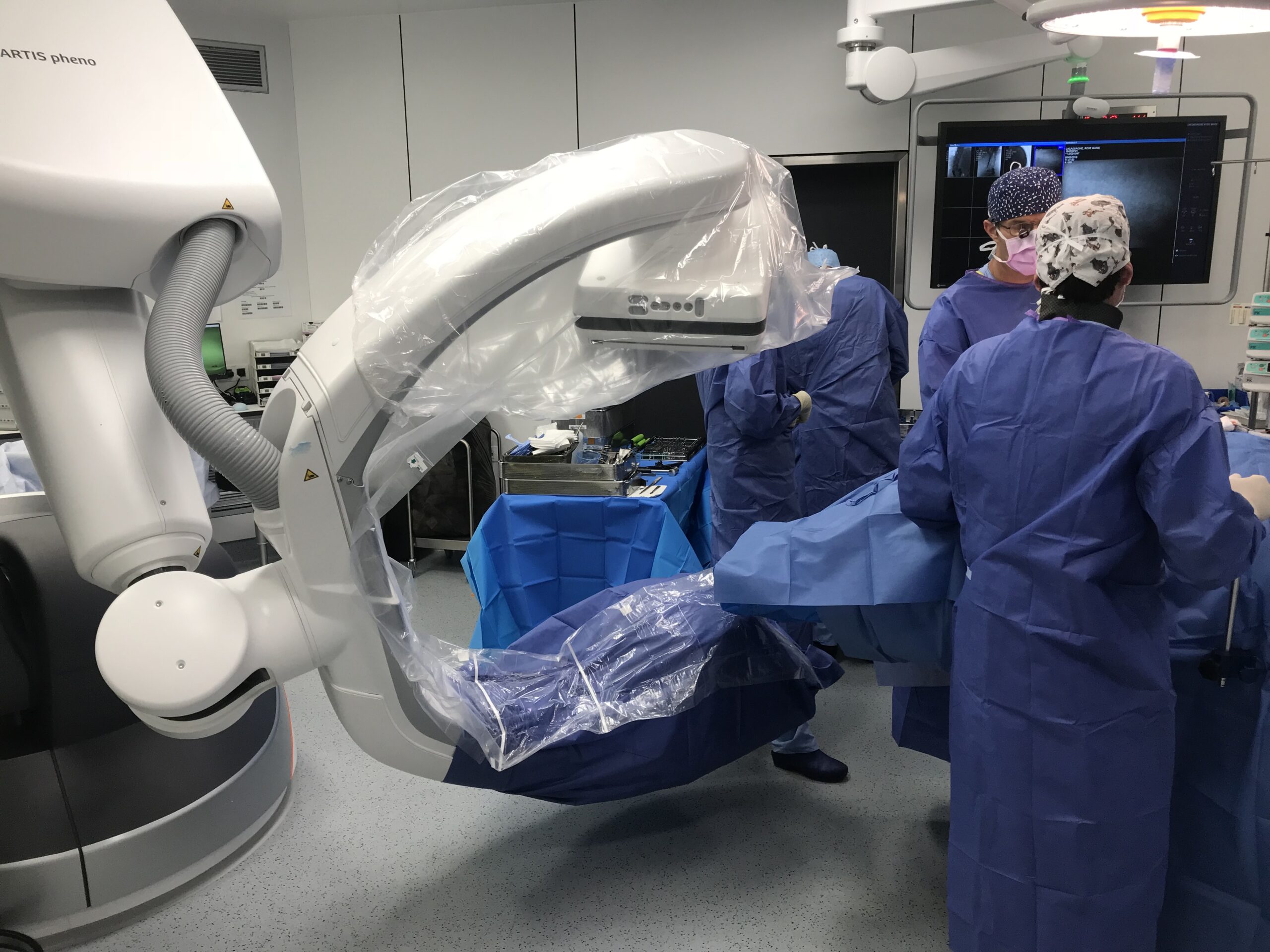
At the end of 2020, CHIREC's Neurosurgery department, led by Professor Collignon, acquired new technology, one of the first in Europe, combining a spinal navigation system with an intraoperative robotic scanner in a fully digitized operating room.
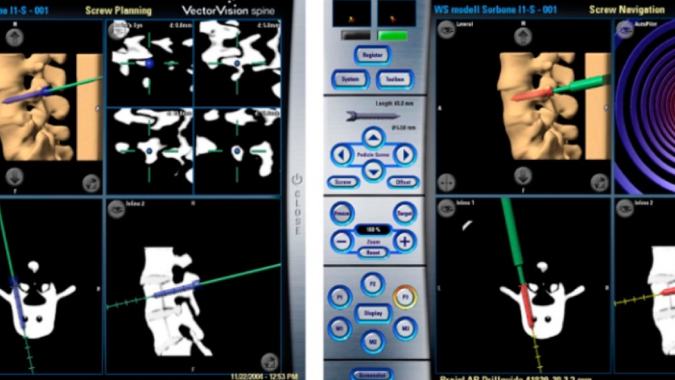
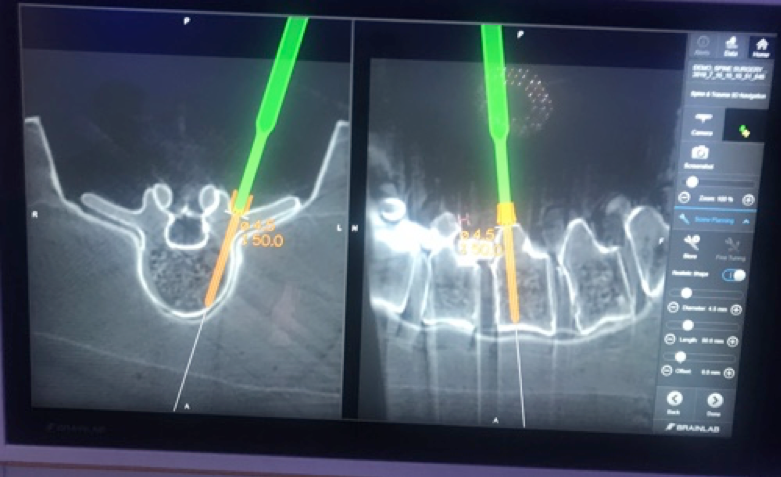
This technology allows the surgeon to place, without radiation and with high precision, spinal implants such as pedicle screws or interbody cages during so-called minimally invasive arthrodesis procedures. The surgical procedure is performed via small incisions, reducing devascularization and denervation of the paravertebral musculature. This minimally invasive surgery reduces hospitalization time and allows patients to resume their activities sooner. Due to the narrow exposure of vertebral structures, this technique relies heavily on high-performance imaging.
Before the arrival of this new technology, called "spinal navigation," surgery had to be performed using fluoroscopy and required numerous radiographic acquisitions, significantly irradiating the patient, nursing staff, and the surgeon, as well as their scrub nurse and assistant.
Visit the full article here
The advantages obtained from spinal navigation are numerous:
1. It allows for surgery with limited radiation for the patient and none for the surgeon, their assistant, and the nursing staff, because most of the intervention is performed without needing to acquire images via fluoroscopy, and the placement of material is done under guided imaging control. The implantation of material can also be done via a robotic arm that will position itself exactly where the implant needs to be placed.
2. The precision provided by this technology is superior to that obtained during classic surgery, which increases the chances of success of the intervention and reduces the risk of surgical complications.
3. The minimally invasive surgical procedure is therefore made safer and more effective, thus allowing for faster recovery and an earlier return to the patient's activities.
This technology therefore allows the surgeon to be more precise in their actions and to minimize the risk of complications, while significantly limiting the radiation dose for the patient, healthcare staff, and themselves. Furthermore, it perfectly complements the minimally invasive procedure performed by the surgeon, allowing the patient faster recovery and an earlier return to their activities.